Monday, January 9, 2012

The Queen of the Sabbath

...Be thou from hell or heaven, say, what matters it, O Beauty! Fearful sphinx ingenuous, if alone. Thy foot, thine eye, thy smile, unbar the Infinite which I have always loved and never yet have known...” - Baudelaire


( i ) Queen to two Kings

Anne de Bretagne was twice queen of France. She was descended from the house of Foix on her mother Marguerite's side and during her reign she became the wealthiest and one of the most powerful women in all of Europe. Intelligent and well educated, it was said that she possessed one of the finest libraries in the world, knew several different languages and was versed in the hermetic cabala and reportedly highly clairvoyant. She was made queen by her second marriage at the tender age of 16. A description of her at the time states, she is of small height, slender, and she walks with a visible limp, even though she wears high heels shoes to hide her deformity. She is of dark complexion and is fairly pretty. Her wit is remarkable for her age and once she has set her mind on doing something, she makes sure she succeeds, by all means necessary and at any price.

Anne's union with Charles VIII was reputedly not a happy one and it is said she brought two beds with her to the marriage and the King and Queen often lived apart. She was crowned Queen of France at saint-Denis on 8 February 1492 and later became Queen of Sicily and titular Queen of Jerusalem following her husband's conquest of Naples. Although pregnant for most of her adult life none of the children produced by her union with Charles survived beyond early childhood.

Charles VIII died in 1498 and Anne, who was now 21 years old and still childless, returned to rule Brittany where she was rapturously received by her vassals. She ordered production of a coin bearing her name and began to gather about her court in Nantes a circle of poets and thinkers, including the Italian humanist Publio Fausto Andrelini who was to spearhead the growth of 'New Learning' in France.

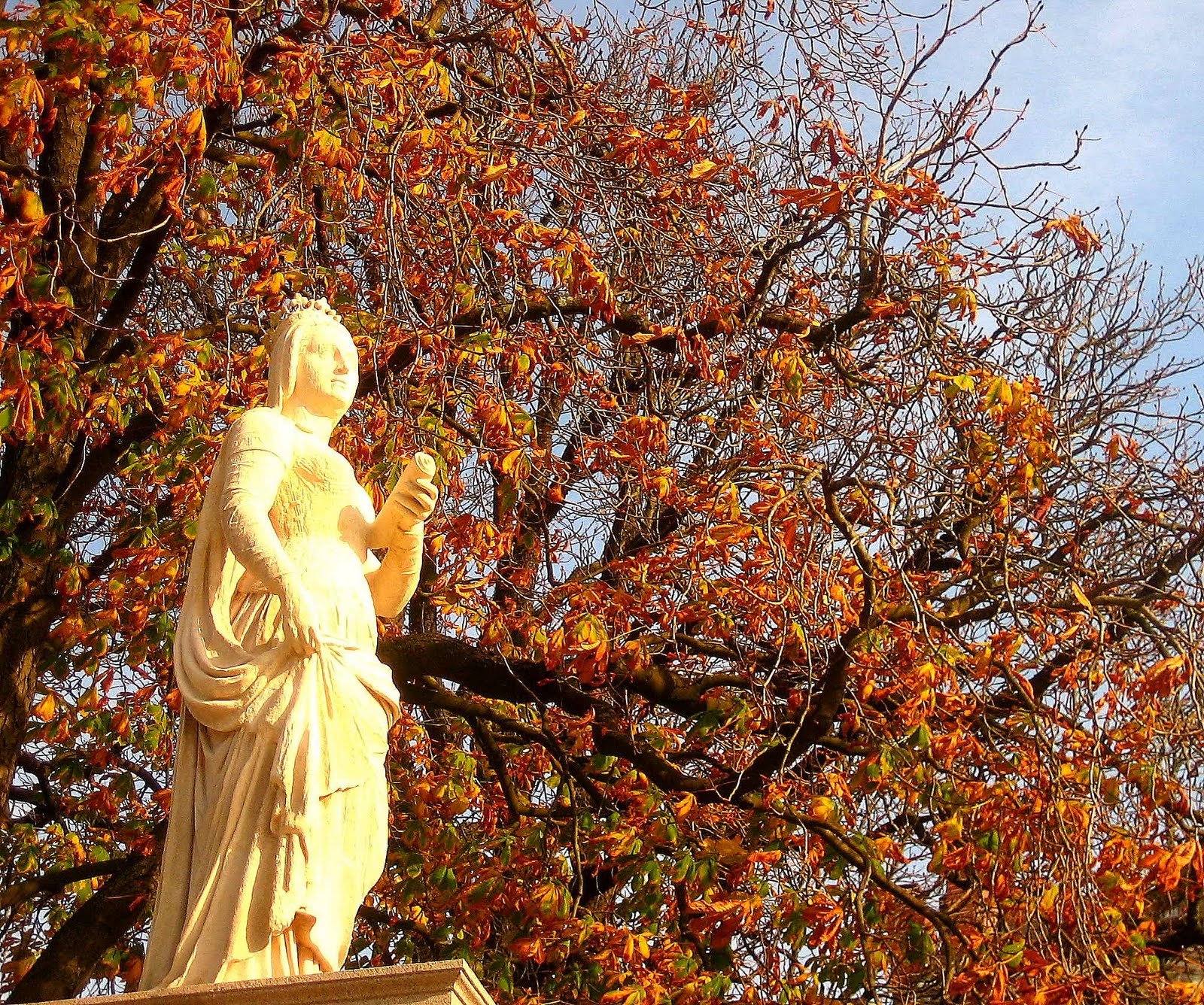
Anne's third marriage ceremony, marking her union with the new king Louis XII, took place on 8 January 1499. She wore white, setting a precedent for all future brides and while her new husband formally assumed supreme executive power over Brittany he continued to recognize her sovereign right to the title 'Duchess of Brittany'. Anne would defend the Duchy's independence until the end of her days and was considered a beloved patroness by the Breton people who referred to her 'the good duchess with the wooden shoes', or sabbots as they are known in France. Of course Anne didn't really wear wooden clogs. Rather it is safe to assume that the affectionate nickname conceals more than one layer of punic meaning. Most accounts of Anne's life concern her regency, but when we start to examine the symbolism in the works of art and literature commissioned by her a whole new story begins to emerge. Hidden in plain sight, or beneath the soles of her shoes so to speak, are a wealth of esoteric analogies detailing the secret transmission of an arcane tradition.
( ii ) Her legacy

The Duchess commissioned a book of manuscripts, a 'Book of Hours', known as 'The Great Hours of Anne of Brittany' and the famous unicorn tapestries currently on display at The Cloisters museum in New York were commissioned to celebrate her wedding to Louis XII. The two most generally accepted interpretations for the cycle of tapestries hinge on pagan and Christian symbolism. The more archaic interpretations focus on the medieval lore of beguiled lovers, whereas Christian writings attempt to reposition the unicorn and its death as a metaphor for the Passion of Christ. This revisionist thinking allowed the traditionally pagan symbolism of the unicorn to become acceptable within religious doctrine. The original myths surrounding The Hunt of the Unicorn refer to a beast with one horn that can only be tamed by a virgin; subsequently, Christian scholars translated this into an allegory for Christ's relationship with the Virgin Mary. A third, alchemical interpretation of the imagery in the tapestries however is possible in which the unicorn becomes analogous with the White Stone as the fabled beast can only be tamed by the touch of a pure woman just as the 'White Tincture' can only be experienced by purifying the feminine forces within our beings.

The unicorn and I are one.

He also pauses in amaze

Before some maiden's magic gaze,

And while he wonders, is undone.

On some dear breast he slumbers deep

And treason slays him in that sleep.

Just so have ended my Life's days;

So Love and my Lady lay me low.

My heart will not survive this blow.”

- Love song by the poet Thibaut, King of Navarre - 13th century


In 1508, royal portraitist and hermeticist, Jean Perreal, painted a famous tableau ( above ) that now hangs in the Musée Dobrée in Nantes, depicting Anne de Bretagne receiving Antoine Dufour's manuscript praising famous women, a text that refers to a number of her illustrious antecedents, among them Joan of Arc and the celebrated Esclarmonde de Foix, the last high priestess of the so-called 'Cathars''.

An attendant monk has his arms folded in a manner suggestive of the cosmic lemniscate, the symbol of infinity while the predominant colours in the tableau are black, gold and red, shades richly evocative of the sacred priestess tradition and the Great Work. Behind Anne's seated figure hangs a veil decorated with a palm leaf and pomegranate motif, a symbol of the union of male and female principles that serves to further reinforce the alchemical interpretation of the unicorn tapestries as well as instantly bringing to mind the image of the High Priestess, the second trump of the Tarot's major arcana. In the earliest surviving deck to bear inscriptions, the 18th century woodcut Marseilles Tarot this figure is crowned with the Papal tiara and is believed by some to be identified with the legend of Pope Joan. Others identify this trump with intuition, the unconscious or the Shekinah, the feminine aspect of the divine. A crescent moon floats in the menstrual tide at her feet, a horned diadem adorns her head reminiscent of the Egyptian goddess Isis and a solar cross appears on her breast, again symbolizing the union of male and female principles. A scroll rests on her lap, half hidden by her veil or mantle symbolizing esoteric and exoteric knowledge. Behind her two pillars, explicitly identified with Jakin and Boaz, the twin pillars of the temple of Solomon support a tapestry embroidered with palm leaves and pomegranates that veils the further, deeper mysteries that lie beyond.

( iii ) The sepulchre

11.11.11

The morning of the eleventh day of the eleventh month of the eleventh year of the 21st century was unseasonably warm in Nantes. Sunlight glimmered on the tumid waters of the Loire as we made our way through the broad, river front streets towards the imposing gothic edifice of St. Pierre's Cathedral that lies just beyond the château of Anne of Brittany.

We paused to admire the profusion of gargoyles and stone effigies that adorn the cathedral's great porch. Then, as we started up the steps the great doors swung wide as if on cue and for a moment we couldn't escape the uncanny sensation that our pilgrimage had been anticipated, our every movement since arriving in Nantes somehow guided and foreshadowed by a lattice of coincidence. Certainly our timing could not have been more perfect. It was just before 11.00 am and as we stepped aside a vast, sombrely dressed procession emerged from the maw of the basilica.

Bishops, prelates and lesser clergy lead the cortège in sumptuous robes and tall hats clutching ornate staffs and croziers, followed by uniformed veterans and widows dressed in black carrying flags. It slowly dawned on us that we had arrived at the tail end of a Mass held to commemorate the French version of Memorial Day. Taking in the widows in their 'weeds', we were struck by the fact that Anne de Bretagne was the first queen to insist on wearing only black after her husband died, and joked between ourselves that she must have been one of the very first 'goths'. Did she have any idea, we wondered, how that one fashion choice would make such an impact on the generations that followed her.

Then we crossed the threshold to enter the body of the church, our eyes slowly adjusting to the hazy golden half light.

On either side of the nave vast columns of white stone soared upwards to the vaulted ceiling that curved high above and a short way down the right hand aisle we could readily make out the object of our pilgrimage. The mausoleum of Anne's beloved parents, Duke Francis II and Marguerite de Foix, was initially erected in 1507 at the church of Carmes but during the French Revolution it was dismantled and hidden by an anonymous patron who did not want to see it destroyed like so many other works of art at the time.

As above, so below: The mausoleum of Duke Francis II and Marguerite de Foix - created by sculptor Michel Colombe from the original designs by Jean Perreal

The mausoleum was only re-erected at its current location in the Cathedral of Saint Peter in 1819 which goes a long way towards explaining the immaculate condition of its pristine slabs and the effigies that adorn them. The ingenious work of sculptor Michel Colombe, following the elaborate plans drawn up by Jean Perreal, principal hermeticist and tomb designer to the court of Queen Anne, wears its five centuries lightly. Indeed the monument described by Fulcanelli in 'Les Demeures Philosophales' ( The Dwellings of the Philosophers, 1930 ) as 'one of the purest masterpieces of the Renaissance' is almost shocking in its modernity, as if the master sculptor laid down his chisel only days ago. The guardians of the vault, pale, implacable figures representing the four virtues, each one standing a good six feet, still hold silent vigil over the slumbering bodies of the Duke and Duchess, mute sentinels of an ancient tradition.

The reclining figures of Anne's parents are so lifelike they look as if they might awaken at any moment like characters from Perrault's Sleeping Beauty. A stone lion rests at Duke Francis's feet and beside it, at Margaurite's feet, crouches a faithful greyhound.

As above: Between the greyhound's forepaws this loyal beast guards a blazon representing the union of the house of Navarre and the house of Foix.

So Below: Saint Martha - the patron Saint of Marguerite de Foix.

Twelve smaller figures appear in sconce's set into the sides of the vault, allegedly depicting the twelve disciples but in all likelihood serving as an allegory for the solar zodiac. The figures hold what appear to be implements of torture, the implements of their martyrdom as some guide books would have us believe. On closer inspection however these tools are revealed to have a decidedly Masonic flavour, hinting at a hidden purpose.

As above, so below: Two of the 'twelve disciples'

The custom of adorning the final resting place of temporal monarchs with the houses of the Zodiac can be traced back to ancient Egypt and beyond. Tombs dating to around 3000 BC have been found to contain some very curious magical implements or 'chessboards'. On these boards there is room only for the pieces themselves – none for moving them. There are always either 7 or 13 pieces arrayed along each side of the board and, more significantly, the pieces themselves are always in he shape of crescent moons. Osiris, to whose cult these mysterious objects belonged, was a 'horned God' and his sister, Isis (or possibly his mother according to Robert Graves ) was a 'horned Goddess'. The American researcher James Vogh speculated that a lunar zodiac of thirteen houses may have existed long before the familiar solar zodiac came into common usage. He believed that the thirteenth sign may have been Arachne, the Cretan spider goddess.

One of the major pieces of evidence to support this notion is a lunar zodiac found in a mosaic (see above) at the Jewish gnostic synagogue of Beth Alpha in Israel's Jezreel Valley. It is clear that this has been altered from an original 13 house to a 12 house zodiac. In the centre of the wheel crouches a spider-like figure, arachne, with 13 items in her headdress and the crescent Moon on her left shoulder. In all likelihood the twelve disciples surrounding Christ were another representation of this zodiac just as King Arthur was said to sit at a round table surrounded by his 12 most favoured nights. In Scandinavian mythology the story of the death of Balder, the most loved of the gods, tells of how a banquet was held in Valhalla to which 12 of the gods were invited. While the feast was in progress Loki, the spirit of strife and mischief, who was not invited, turned up regardless as the thirteenth guest. He gave blind Hoder an arrow of mistletoe, tricking him into shooting and killing Balder. In the Saxon version of the story Balder is resurrected and the golden age of mankind begins.

The original story of the Sleeping Beauty follows an identical outline with 12 good faeries invited to the christening of the King's daughter. Each bestows a blessing on the child but a thirteenth evil faery, who has not been invited, appears, cursing the child with death should she ever prick her finger. Despite all precautions, she does, falling into a deep sleep. Around her the castle and it's lands also fall into a death like slumber until a brave knight finally finds his way to the princess's side. When he kisses her the knight revives not only the princess but the castle and the land itself.

As above, so below: Gustave Dore's masterful illustrations for Perrault's 'Sleeping Beauty'

The parallels in these stories are obvious. In each of them, the best beloved is killed by the most evil or weakest member of the group of 13 and desolation follows. Then the beloved one returns to life and all is well once more. Clearly then, these tales, like the enigmatic lunar counters of the Egyptian 'chessboards' and the figures that adorn the vault of Duke Francis and Duchess Marguerite, are all metaphorical representations of the cycle of the year. They tell the familiar tale of the Sun who is slain each year by the Moon only to be resurrected to bring another golden summer. The lunar year contains only twelve and a half complete cycles of the Moon. The thirteen lunar month is therefore short and 'weak'. It is in this 'weak' month that the sun 'dies'

The four guardians of the vault, the four 'virtues' demand far deeper study....

We took a step back to face Justice and were absolutely blown away by her presence. This Justice is certainly not blind, in fact she wears no veil at all and it is as if nothing escapes her gaze. There is something in her expression that is so life like and challenging and yet so knowing. The perfect representation of a warrior goddess as she stood before us with her solar sword pointed up toward the heavens.

Before Miss Scarlett could stop herself she reached over the fence to touch the nine-rayed sun that appears on the center of Justice's sword like a protective talisman, cutting herself on one of the sharp spikes of the protective fence . She didn't cry out and didn't seem to really notice that she had hurt herself. It seemed somehow right to spill a little blood in the presence of this virtue as blood is what binds us through the worlds, the blood of mortals, the blood of kings, the blood of gods and angels, the only thing that truly has the strength to resonate against the void, to give life to the unmanifest, to beat back the darkness that threatens hour by hour to devour us.

In 'Dwellings of the Philosopher's', Fulcanelli compares Colombe's image of Justice to the goddess Minerva and says that she must be regarded as the divine and creative thought, materialized in all nature, latent in ourselves as it is in everything that surrounds us. She is the veil of philosophy in which we can wrap ourselves. In her second form as Philosophy she “confers on those who espouse it a great power of investigation.” She enables penetration of the intimate construction of things which she cuts short as with her sword, discovering in it the presence of the spiritus mundi, of which the classical masters speak, and which has its center in the sun and draws its virtue and motion from the radiation of the heavenly body. She also gives knowledge of the general laws, rules, rhythms, and measures observed by nature in the elaboration, evolution, and perfection of created things (the scales). She finally establishes the possibility of acquiring sciences based on observation, meditation, faith, and written teachings (the book). By the same attributes, this image of Philosophy also teaches us the essential points of the labor of the Adepts and proclaims the necessity for manual labor imposed on seekers desiring to acquire the Great Work and the indisputable proof of its reality. Without technical research, without frequent attempts and reiterated experiments we can only go astray in a science whose best treatises carefully hide the physical principles, their application, the materials, and the time required. According to the master alchemist: “...whoever dares to claim to be a philosopher and does not want to labor for fear of cold, fatigue or the expense, must be regarded as the most vain of ignoramuses, or the most shameless of imposters.

As we worked our way around the vault we were unprepared for the beauty of Strength. She is exquisitely, delicately feminine, with intricately laced flowers that cover the breasts on her armour. Her head is adorned with a conch shell like helmet with the nose of a lion on top. The braids of her hair, so reminiscent of those three enigmatic braids worn by the fair Esclarmonde de Foix, the so-called 'white lady' of Montsegur, would seem to be hieroglyphs for solar radiation, indicating that the Great Work, subjected to the influence of the heavenly body, cannot be performed without the dynamic collaboration of the sun. The braid ( in Greek seira) is adopted to represent the vibrational energy, because, among the ancient Hellenic people, the sun was called seir.

The midsection of this guardian fascinated us with her fish scales reminiscent of a mermaid that lead into a wavelike flower radiating from her belly button, surrounded by a solar symbol. The mermaid is frequently used in hermetic symbolism to characterize the union of the nascent sulphur ( the fish ) with common ( or virgin ) mercury in the philosophical mercury or 'salt of wisdom'. According to Fulcanelli the image of the mermaid may also allude to the alchemical 'Twelfth Night cake', to which the Greeks gave the same name as to the Moon, Selena (selene). This word, formed from the Greek roots (selas), brightness, and (ele), solar light, was chosen by the initiates to show that the philosophical mercury draws its brightness from sulphur just as the moon receives its light from the sun. An analogous reason caused the name siren (seiren), to be attributed to the mythical monster resulting from the combination of a woman and a fish; serein, a contraction of (seir), sun and (mene), moon, also indicates the mercurial lunar matter combined with the sulphurous solar substance. Therefore it is a translation identical to that of the Twelfth Night cake, adorned with the sign of light and spirituality: the cross, evidence of the real incarnation of the solar ray, emanating from the universal father, into heavy matter, matrix of all things, and the terra inanis et vacua (worthless and empty earth) of the Scriptures.


In her left hand the figure of Strength holds a tower, which is cracking from the force of the dragon that she is pulling out and throttling with her right hand. As Fulcanelli puts it in his usual inimitable way: ' Nothing, it can be seen, could better fit the figurative expression of the stone of the philosophers, a dragon enclosed in its fortress, the extraction of which has always been considered a true feat of strength. On the other hand, the image is revealing; for, while we experience some difficulties understanding how a robust and bulky dragon could have resisted the compression exerted by the walls of its narrow prison, we can no more grasp by what miracle it goes entirely through a mere crack in the masonry. Here again we can recognize a translation of the prodigious, the supernatural and the miraculous. .” It is the master alchemist's second suggestion however that we like the best. The tower of strength according to Rabelais, “and that a feat of strength requires courage, wisdom, and power: courage because there is danger, wisdom because due knowledge is necessarily required; power, for whoever cannot do it, should not undertake it.” Always the dire warnings from the Masters. No one ever said that this was an easy school and pulling that winged dragon out of that little crack is not all that different from childbirth or the miraculous strength it takes for the birth of creation itself.

"Wearing a matron headdress with a throat collar" Michel Colombe’s third guardian, the virtue Temperance, according to Dubuisson-Aubenay's Itinerary in Brittany, written in 1636, “...is dressed in simple clothes, a bridle with bit in one hand and in the other, the pendulum of a clock or the balance wheel of a watch..". In her left hand the statue holds a case decorated with a weight-driven clock, a customary model of the 16th century, seemingly a hieroglyph for time itself, the sole master of wisdom - and, like the hourglass, an emblem of Saturn. According to Fulcanelli however the esoteric scope of Temperance lies entirely in the bridle which she holds in her right hand. “...It is with the bridle that the horse is driven; by means of this bit, the cavalier directs his mount as he pleases. So the bridle can be considered as the essential instrument, the mediator placed between the will of the cavalier and the progress of the horse, toward the proposed objective. This means is designated in hermeticism by the name of cabala. So that the special expression of the bridle, that of restraint and of direction, allow one to identify and recognize, under a single symbolic form, Temperance and the Cabalistic Science...”

Both Fulcanelli and wikipedia make an interesting, indeed crucial, distinction between the hermetic cabala and the Hebraic Kabbala insisting that the two terms have nothing in common, save their pronunciation. “...The Hebrew Kabbala is only concerned with the Bible; it is therefore strictly limited to sacred exegesis and hermeneutics. Hermetic cabala concerns books, texts and documents of the esoteric sciences of Antiquity, of the Middle Ages and of modern times. While the Hebraic kabbala is but a process based on the decomposition and explanation of each word or letter, the hermetic cabala on the contrary is a genuine language. And as the great majority of didactic treatises of ancient sciences are written in cabala or as they use this language in their essential passages; as the Great Art itselff, on Artephius’ own confession, is completely cabalistic, the reader cannot understand any of it if he does not possess at least the first elements of the secret idiom..”.

In the words of the master alchemist the hermetic cabala is “...a precious key allowing whoever possesses it to open the doors of the sanctuaries, of these closed books which are the works of traditional science, to extract their spirit, to see their secret meaning...” Allegedly known to Jesus and his apostles the cabala was used in the Middle Ages by philosophers, scientists, men of letters, and diplomats. Knights belonging to Orders and knights-errant, troubadours, trouveres, and minstrels, travelling students of the famous school of magic at Salamanca, “...whom we call Venusbergs because they were said to come from the mountain of Venus and discussed among themselves in the language of the gods...

The Latin word Caballus and the Greek word kaballes both mean pack-horse but here the pack referred to would seem to be the sum total of ancient knowledge and medieval chivalry, the heavy baggage of esoteric truth transmitted down through the ages. Any language is capable of conveying this hidden message or becoming cabalistic through double meanings. We detect it's echoes in the works of great initiates such as Homer, Virgil, Ovid, Plato, Dante, Cervantes, Goethe and Swift , in the myth cycle of the Round Table and of the Grail; in the works of Francois Rabelais and Cyrano de Bergerac, in Perrault's Tales of Mother Goose and Thibault de Champagne's Songs of the King of Navarre. According to Fulcanelli “...The cabala and symbolism use different paths to reach the same goal and merge into the same teaching. They are the two master pillars erected on the corner stones of the philosophical foundation that support the alchemical temple of wisdom.”


The last of the virtues was the most simple, humble and perfect of them all. Prudence stands tranquilly peering into her looking glass. Anne de Bretagne seems to have deliberately chosen this aspect to bear her own countenance, her composed features staring placidly into a mirror of stone. Only on closer inspection does this guardian's most startling aspect become readily apparent. The figure is double faced...

As above, so below: The two faces of Prudence, symbolizing nature in all her aspects and the final stage of the alchemical process in which opposites combine to produce the Rebis, the perfect, androgynous being

On the back of Anne's head appears the carving of a bearded old man, bringing to mind the god Janus, he of beginnings, endings and doorways into the Otherworld, a subtle play perhaps on both the dual nature of the Duchess and on two worlds existing side by side, 'on reality' and it's shadow, the perfect combination of masculine and feminine principles, of the sun and the Moon, the exoteric outer realm of surface appearances and the inner world of hermetic truth. Of all the images we had seen in this place this curious, hieratic figure seemed to come the closest to embodying the true nature of magic, of encapsulating the subtle dualities of the Western esoteric tradition. It seems entirely appropriate that Anne would lend her own face to Prudence, making her effectively the 'first and last and always.'

At the base of the statue her foot is crushing a viper, which is in the throes of a death spasm, signifying her will to crush the heads of her enemies while preparing for the chemical wedding. Her mirror too carries a complex double meaning which is far cry from vanity. It could be the representation of Yesod, reflecting the cabbalistic world, the mask of the moon. The master alchemist himself thought her mirror was an image of “Truth which was always considered by the classical authors as the hieroglyph for the universal matter, and in particular was recognized among them as a sign of the very substance of the Great Work. Subject of the Sages, Mirror of the Art are hermetic synonyms which veil from common men the true name of the secret mineral. It is in this mirror, say the masters, that man can see nature unveiled. Thanks to this mirror, he can know the ancient truth in its traditional realism. For nature never shows herself to the seeker, but only through the intermediary of this mirror which holds its reflected image.”

In her left hand the figure of Prudence holds a compass which is a tool used for measurements whose significance we need not explain to all you fellow brothers out there. To be brief it is an instrument in which one can complete the perfect circle, an allegory for the beginning and the ending, whose proportions are only known to Nature herself. In the system of the Jewish Kabbala this perfect balance is elegantly expressed in these passages from the Lesser Holy Assembly; “When the Bride is united to the King in the excellence of the Sabbath, then are all things made one body... the beauty of the female is completed by the beauty of the male... When the Mother is united to the King, the worlds receive a blessing and are found in the joy of the universe.”

It is easy to see from whence the brilliant hermetic artist, Jean Perreal, may have gathered the inspiration for the four cardinal virtues. Once again the Tarot provides the key to help us unlock the possible source for this masterpiece in a set of Italian 'educational' prints or cards made around 1465 and known as the Tarrochi of Mantegna.

The identity of their creator is lost to us now and their original intended purpose, possibly as a tool of mystical instruction rather than an instrument of divination, must perforce remain a mystery. Monsieur Perreal travelled and worked extensively in Italy so that he would almost certainly have come into contact with these images. After years of painting royal portraits one of the last things that he ever painted was an allegorical image, curiously titled 'The Lament of Nature to the Wandering Alchemist'.

( iv ) Coda - extracting the heart

After fourteen unsuccessful pregnancies Anne of Brittany's third marriage succeeded in producing two female heirs – Claude, whose congenital deformity did not prevent her from becoming Queen consort to Francis 1 and Renee who was to become the Duchess of Chartres. In 1554 Renee was accused of heresy and forced to recant on pain of losing her lands, titles and possessions.

Anne herself failed to survive the winter of 1513-14, succumbing to a kidney-stone attack at the Château of Blois. She was interred in the necropolis of Saint Denis following a funeral of exceptional length, lasting a full 40 days and inspiring all future French royal funerals.

According to her will Anne's heart was placed in an enamel gold reliquary designed by Jean Perreal before being borne back to Nantes where it was deposited in the vault she had constructed for her parents. Following the revolution the reliquary was exhumed by order of the National Convention and seized as part of a collection of precious metals pertaining to churches. It was kept in the National Library instead of being melted down however and was later returned to Nantes where it is currently on display in the Musée Dobrée.


...In the cathedral at Nantes, the evening twilight gradually declines. The shadows invade the ogival vaults, fill the nave, and bathe the petrified humanity of the majestic edifice. On our sides, the powerful and solemn columns climb toward the intricate arches, the transepts and pendentives which the increasing darkness now steals from our eyes. A bell is ringing. An invisible priest in a subdued voice recited the evening prayers, and the knell from above answers the prayer from below. Only the peaceful flames of the tapers spot with golden brightness the darkness of the sanctuary. Then once the mass is done, a sepulchral silence hands over all these inert and cold things, witnesses to a distant past, pregnant with mystery and the unknown...” - Fulcanelli

Wednesday, September 14, 2011

The Mother of Toads


For a number of years now I have been planning to return to the chair as a director of genre cinema. Since relocating my headquarters to the isolated Cathar enclave of Montsegur in the French Pyrenees I have dreamed of capturing this magical world on camera and bringing the technological expertise of 21st century film making to bear on the wealth of local mythology that colours our day to day lives here in the Zone.

I could never have guessed quite how swiftly those dreams would be realized...


( 1 ) Morrocco – March 2010

Miss Scarlett and myself had flown south to the whispering sands of the wide Sahara to escape the worst of the European winter. After a series of misadventures we found ourselves in Fez, holed up in a vast, abandonned Moorish mansion while a fierce storm closed in on the ancient, mud walled medina. As the wind grew steadily stronger, howling and worrying at the shutters we withdrew deeper into the rambling, tenebrous household. We kindled candles and flambeaux, creating a warm, inner sanctum in the eye of the storm and bade our fixer, a handsome, wily youth who went by the name of 'Skilful', not to admit any visitors other than those hands required to keep up the steady flow of subtly spiced Morroccan dishes and sugared dainties required to refresh, replenish and reinspire us as we set about our latest writing project.

We had recently purchased a glow in the dark ouja board and swiftly made contact with a disincarnate entity that claimed to be my guardian daemon, Moag – my invisible playmate and boon companion since childhood. In point of fact I don't normally place much store in 'channelling' but we had time on our hands and I was game for a laugh. After exchanging a few questions to establish that the daemon was indeed who he claimed to be we turned to the matter at hand, asking his advice on which project to focus on. We had been toying with several ideas for new screenplays all of which the daemon promptly rejected out of hand. Much to my surprise Moag asked us instead if we were familiar with a short story by Clark Ashton Smith entitled 'The Mother of Toads.'

Above: The daemon Moag

I had read plenty of weird fiction in my time but this obscure yarn had hitherto escaped my attention. 'The Mother of Toads' ( henceforth referred to as 'M.O.T' for expediency's sake ) first appeared in 'Weird Tales' in July 1938 and having long since passed into the public domain is now widely available to casual readers over the internet. ( http://www.eldritchdark.com/writings/short-stories/143/mother-of-toads ) This cruel, erotic fable, running to little more than three pages, is set in medieval France in Smith's fictional woodland kingdom of Averoigne and concerns a young apothecary's apprentice who falls under the seductive spell of a venomous shape shifting witch named Mere Antoinette. Our disincarnate advisor was adamant that rather than mounting a direct adaptation we should use the original tale as the the jumping off point for a modern day homage to both Smith and the immortal H.P. Lovecraft, issuing us with a series of very direct instructions as to how to go about writing the screenplay.

The daemon insisted that the new scenario should open with two American tourists, a young anthropology student named Martin and his leggy girlfriend Karina, buying a pair of eldritch earrings in the market place at Mirepoix. Having moved with the times Smith's titular sorceress now suppliments her income by selling bizarre hand crafted jewellery based on designs drawn directly from the 'Necronomicon', Lovecraft's mythical grande grimoire. Intrigued by her claim that the book not only really exists but has been handed down through Mere Antoinette's family for untold generations Martin visits her cottage, setting in motion a series of events that ultimately places both him and his partner in mortal jeopardy.

The finished screenplay ran to roughly fifteen pages intended to evoke of the pulp fiction and EC and Warren comics of my youth, specifically the work of 'Ghastly' Graham Ingels and Berni Wrightson as viewed through the distorted visual aesthetic of those masters of European gothic cinema – Mario Bava, Dario Argento and Lucio Fulci. In short the finished piece was a sort of love letter to the genre that had nourished my creative roots but quite how we would go about realizing the beast remained a mystery to us at the time of writing.

( ii ) Occitania – May 2010

On our return to Europe we recruited the aid of our friend Emilio Ranzani(above) whose similarly Lovecraftian short 'Langliena' had been attracting good notices on the festival circuit. Emiliano further honed what we had come up with in Fez, adding baroque curlicues to the gore scenes and enthusiatically encouraging us to take the whole, beserk endevour to the next logical level. Initially we had intended to shoot the thing in our own back yard using available materials, being well aware that finding funds or any form of distribution for a short subject of this nature would, under any sane or normal circumstances, be highly unlikely if not downright impossible. What we hadn't reckoned on, of course, was that this particular short was demonaically inspired and hence apparently exempt from the normal dreary rules of cause and effect.

Within 24 hours of finishing the screenplay we heard that David Gregory at Severin Films ( who had recently distributed my earlier flick 'HARDWARE' on DVD in the States ) was preparing a new anthology film entitled 'THE THEATRE BIZARRE' based on Oscar Méténier's Le Theatre du Grand Guignol ( literally the 'Theatre of the Big Puppet' ) which was founded in 1897 in an old chapel in the Pigalle area of Paris with the intention of producing graphic, naturalistic horror shows, a form of provocative amoral entertainment, literally the forerunner of today's splatter films. We figured that 'M.O.T' might well fit the bill and sent David a copy of the script. His enthusiastic response caught us off guard. I was used to people passing on my material, usually without even bothering to read it. By contrast the speed with which the pieces fell into place on 'M.O.T' proved rather bracing. David was at the Cannes film festival so Miss Scarlett and myself bundled into the Shadow Theatre interceptor and high tailed it down to Montpellier where we rendezvoused at the railway station to clinch the deal. And so, without further ado, the project slid effortlessly into preproduction.

David had put together an impressive roster of directorial talent with Tom Savini, Buddy Giovinazzo, Doug Buck, Karim Hussain and Jeremy Kasten lined up to shoot the other segments and the linking scenes that would ultimately feature Udo Kier as the show's beserk automaton M.C. We knew the budget wouldn't be able to stretch to much more than a five day shooting schedule and would require a huge amount of unpaid elbow grease but the challenge was irresistible. We hoped we might supliment our meager funds by getting the Pyrenean Film Commission on side and would have to find a French production company to hold the pieces together and assemble the key personnel.

Doug and Karim had previously dealings with a young producer named Fabrice Lambot whose production company Metaluna films was based in Paris. After some preliminary negotiation by cell and e-mail Fabrice agreed to hop a flight to Toulouse and rendezvous with us to tour the locations before drawing up a final budget and schedule for submission to the film commission. Of course that meant a suitable location would have to be found for him to tour.

As above, so below: The Metarie Blanche


The derelect stone building known as the 'Metarie Blanche' that squats astride a densely wooded hill near La Serpent had always been at the back of my mind as a potential location for the witch's cottage in 'M.O.T'. The house had a curious history, having been built some forty years ago by one of our friends, Celia Brooke, the flamboyant grand daughter of Sultan Brooke, the white rajah of Sarawak. ( pictured below with myself and a portrait of her illustrious grand father )

Celia and her husband, the leader of the international Sufi Movement, had purchased the property after a man she described as 'Hitler's clairvoyant' had accurately described it to her following a chance meeting at a party in swinging 70's London. The ageing German psychic had prophecied that she would one day find treasure there but after Celia and her first husband went their separate ways the property had fallen into disrepair. Celia moved out of the Metairie following a traumatic series of events in the early nineties ( * detailed in my previous blog – 'The Immortal's Feast' http://shadowtheatre13.com/thethreemothers18.html ) and the building's most recent tenant, the Sufi sheik, dolphin communication and zero point energy expert, the enigmatic Dr. Adam Truimbul had since upped stakes and relocated to Hawai. After several decades of legal manouevering the issue of who actually owned the property remained crucially unclear.

The Metairie's melancholic, gothic ambience was further enhanced by its location, a stone's throw from Rennes les Château and what our sorcerer friend, Uranie the hermit of the River of Colours, believed to be one of the seven dreaded gateways to Hell, the perfect setting for 'M.O.T's twisted tale of gloom and perdition. As long term followers of this blog are doubtless already aware Uranie is not only an accomplished geomancer but a huge fan of the genre, possessed of an encyclopaedic knowlege of early 80's Spaghetti horror. In fact I half suspected Uranie of having used his sorcerous powers to help bring the production together.

Among the installation art and Voodoo shrines surrounding his cottage I had come across subtly modified box covers for Lucio Fulci's 'Gates of Hell' and the 'The Beyond', a film whose plot hinged around another one of Clark Ashton Smith's creations, a black tome of eldritch lore referred to as the 'Book of Eibon'. Uranie claimed he had pinned the box covers to his fence in an effort to warn casual bypassers of their proximity to the infernal portal although I couldn't help but feel he had left them out as bait.

We had come across a copy of my earlier film 'Dust Devil' inside a box cover for Charle's Band's 'Tourist Trap' and noticed a unused ticket for Karim Hussain's 'La Belle Bette' ( 'The Beautiful Beast' - 2006 ) among the other mondo bizarro souvenirs propped on Uranie's mantelpiece. ( * see 'The Mark of the Beast'
http://terraumbra13.blogspot.com/2010_05_01_archive.html ) Karim had already volunteered to serve as 'M.O.T's director of phorography and regardless of whether or not some form of spaghetti voodoo was at work it seemed to make perfect sense to cold call the star of 'The Beyond', Catriona McColl, and ask her if she were willing to essay the pivotal rôle of Mere Antoinette, the dreaded mother of toads herself.

As above, so below: The Recce - Assistant director Lauri Loytokoski, Richard and Karim Hussain

( iv ) Extracts from the weblog of Scarlett Amaris

La Serpent – July 2010

It was nearing dusk when we made it up to what is left of the Metarie Blanche. Celia wandered around showing us where different gardens had once been planted and I got the sense of how much love and hard work had gone into building the place. It all seemed so far away now as we seated ourselves on the hillside to share a bottle of white wine. The rest of the crew still buzzed around the property, taking pictures and measurements and I was watching with one expectant eye as Richard took a phone call from Catriona MacColl. He paced back and forth at the top of the ridge. I could catch a word here and there, enough to tell that all was going well. Then I heard a car drive up and some kind of loud ruckus going on where we had parked the vehicles. Celia and I watched as a couple got out with an evil looking doberman snarling and straining at its leash as it's masters shouted for everyone to get off the property. “It's my property,” Celia was watching indifferently, “Don't get up.” We watched for a couple of minutes and it was clear that the situation was escalating. “We're going to have to do something.” I said casually as I took another sip of wine. “I know, dear, but these situations are always so boring...” Celia started to rise and I followed closely behind her. She opened out her arms dramatically wide as she neared the raised voices, “I'm Celia. How may I help you? Welcome to my house...” If looks could kill then Celia would have been a cinder, but I her grandiose entrance seemed to shock the screaming couple into submission. Everyone looked a little taken aback as phone numbers were quickly exchanged and the couple got in their car with the dog and burned rubber down the gravel road.

“Do you think it was something that I said?” Celia gave me a knowing half-smile. “We left that half drunk bottle back on the ridge...”

“Say no more” And we wandered back in the midst of the confusion to finish it off. Richard had been on the phone the entire time trying to shield out the screaming match. He looked half-pleased and utterly terrified at the same time as he walked over to the rest of the group where everyone was worked up into a tail spin. The story of who really owned that property will never be figured out, so many deals and double deals, forged papers, etc. Somehow I knew that we would get the place as a location and another part of me just wanted to leave it alone. That beautiful place had caused so much misery already. We packed everyone back into the cars and headed back to Rennes. “Just like Rennes” I thought, “nothing is ever a straight shot, nothing is ever straight forward.” We bid goodbye to Celia who told us not to worry about 'those nasty people', she would make sure that everything worked out.


Next stop was Uranie's cottage to tell him what was going on and to talk over some of the symbols that we might need for the shoot if we ended up using the Metarie Blanche. Uranie looked wide eyed when we told him what had happened and said that the place had 'a very bad past.” Then he consulted a pantheon of different esoteric charts and decided the day and time that would be best to have him come and bless the house. He didn't feel that it would be safe to shoot there otherwise and I had to agree with him. There was a sadness and a malevolence that seemed somehow cemeted into the very fabric that was still holding up those walls.

There was no time to ponder these thoughts as our friend Alain, the dancing faun, came singing up the road. Alain has the most amazing ability to just show up, like he knows exactly where everyone is the moment that they step onto the plateau. He took an immediate shine to our producer Fabrice and while trying to concentrate on the different sigils that Uranie was explaining to me, I could hear Alain exuberantly telling Fabrice about the four different portals to the other world that existed in the area. 'One in Bezu, one in Bugarach, one in Rennes and one in Montsegur'. He took Fabrice outside to show him the four directions of the portals and having just met Fabrice and him just meeting us, I thought it might be a little much to take onboard. But, hey, it's the Zone and it's got a high weirdness factor. Better to have it all out in the open. Uranie, Richard and I finished up a magical plan of attack and went outside where Fabrice and Alain were having a friendly, animated discussion. As we walked back towards the car Fabrice was shaking his head, “that guy is amazing. You should definitely interview him. You wouldn't believe the things he had to say...” We both smiled having heard Alain's speil before and partly in relief that Fabrice was taking it all in stride. Things looked good for MOT. Catriona MacColl was on board, the resident sorcerer Uranie was on the case and it felt like all the pieces were starting to fall into place.

Above: Richard with MOT producer Fabrice Lambot at La Serpent

Approximately a week later we returned to the Metairie to meet with Dr. Truimbul's partner and close the deal. Nancy was one of the strangest looking women that I had ever seen. Obviously American and dressed in a high end, sporty kind of way, her face was so perfectly smooth that it was impossible to tell her age and she just looked perpetually surprised. I'm not sure that those heavily botoxed muscles even functioned anymore. Her handlers hovered about her, seemingly terrified that she was talking with us and yet afraid of her at the same time. Richard told her the whole synposis of Mother of Toads and what we were planning on shooting in the house. She listened attentively although there was no way to read if anything registered with her. At the end she blinked and then started outside as we followed her. She turned to face us both, “Mere Anoinette should drink green drinks.'

I was utterly confused. “You mean like energy drinks?” I ventured.

“Green drinks with flies.” she answered.

“Ohh...” we both laughed, “that could be a very fun idea.”

“Yes, it could be. But people do eat flies. I had a friend once who grew his own flies that he ate for protein.”

“Did he live around here?” I couldn't help but ask.

“No. He lived underground. He was an alien, but he's dead now which is probably a good thing.” Rarely are we silenced but neither of us could figure out what to say to her. She went on like we were all the best of friends. “We're going to dinner after this with some friends at the bottom of the road. Real peasants, real salt of the earth people. Their mother goes wandering from time to time. A couple of times they've found her up here. But now they tie her to a chair at night so she doesn't get out as much.” I had to close my jaw that had hit the ground and without missing a beat, Nancy walked over to the stone bench and sat down on it. “Have you sat on this bench yet?” She asked Richard without waiting for an answer. “You should make sure that it is in your movie.” “Why?” asked Richard. “Did something special happen here?” For a second I saw an actual emotion try to pass across her face, but I'll be damned if I know what it was. “It's a secret...” she giggled and then wandered off to her handlers. End of interview and so typically Rennes.

We started whispering as soon as she was out of ear shot.

“Did she really say that the 'peasants' down the road tie their mother to a chair?”

“Yes.”

“And her fly eating friend was an alien?”

“Yes. Like I told you the rich are different.”

“That would be an understatement...”

As above, so below: Mother of Toads concept art by Ivan de Castries

( v ) Extracts from Richard Stanley's journal

Montsegur – Morenci – Mirepoix – October 2010

The period leading up to the commencement of principal photography on ' M.O.T' was a strange and arduous one. The principal toad monster was designed and redesigned as we struggled to find a way of achieving the beast on the funds and materials available and Karim scuffled to pull together an effective camera and lighting package. At length it was decided to bring in a top of the range Sony Red Mysterium X from Belgium for the principal photography while Emiliano would take care of the second unit photography using a Canon 5D.

Above: Mother of Toads D.P. Karim Hussain with friend

The highly professional crew, approximately 35 people in all, were assembled out of Paris and Toulouse and housed at Madame Couquet's auberge in Montsegur while the principal cast, rounded out by an easy going young Texan named Shane Woodward in the rôle of the doomed anthropolgy student and Argentinian soap opera star Victorian Maurette as his girlfriend Karina were billeted in a hotel in the neighbouring village. Coming up with the army of gigantic toads called for by our somewhat gonzo screenplay proved to be a rather more difficult matter.

As above, so below: Storyboard images by yours truly for 'The Mother of Toads'

It was perilously late in the season and we had been forced to pull the dates of the shoot to accommodate the toad's life cycle in the hope of completing the necessary sequences before the beasts went into hibernation for the winter. By the time the first day of principal photography rolled around however we still had only one rather small and decidedly sleepy looking toad at our disposal.

As is so often the case when you try to shoot anything the weather took a turn for the worse with a ferocious storm blowing in as Day One approached. Fortunately the driving rain and coiling, etherial mist that shrouded the treetops played in our favor, enhancing the sepulchral ambience and bringing out the toads in force.

We rode out the worst of the tempest by shooting the spa scenes with Victoria Maurette up front, knowing full well that all the rain in the world wouldn't matter one jot so long as we were safely shooting indoors or underwater in a heated swimming pool.

As above, so below: Scenes from the shoot - Shane Woodward and Victoria Maurette go eyeball to eyeball with the Morenci cross.

The Morenci cross scenes on the morning of Day Two proved a little more problematic and we all came away with damp socks although judicious framing and post-production magic managed to successfully disguise the fact that the entire crossroads sequence had been lensed in the pouring rain.

Above: Karim shoulders the camera for a 'toad vision' shot at the Morenci cross

After completing our work at Morenci we repaired to Mirepoix where we managed to complete the scene in which the young leads buy the earrings from Mere Antoinette in a covered section of the market. Other than a weird, random encounter with a self-proclaimed 'psychic' who spotted us shooting and butted in to make a series of strident prophecies things went pretty much according to plan with the crew working smoothly together despite the language barrier and Catriona effortlessly stealing the show with her portrayal of Mere Antoinette. She had taken the opportunity to observe Madame Couquet's mannerisms during rehearsal and had picked up a tune she had heard her humming as she built the fire at the auberge the day before, a tune Catriona now repeated to suitably eerie effect in an improvised moment at the end of the scene.

By nightfall the rain had begun to slacken off and I started to believe that we might be able get this beast safely in the can after all.

( vi ) Montsegur – Day Three


'I like metal', muttered Eric the toad wrangler.

'Yeah...uhm...I'm sure you do.' Karim nodded, doing his best to humour him. Eric was one of our neighbours, a fellow Montsegurian with a penchant for collecting reptiles, spiders and amphibious critters of varying descriptions but right now he was four sheets to the wind which made his rambling monologue somewhat harder to follow than usual.

'I like to kill with metal.'

'Pardon?'

'I hunt pigs for my dogs. I like to kill pigs'.

Karim nodded again, more slowly this time.

'I like to bathe in the blood of the pigs. I bathe in the blood of the pigs for my dogs. I love my dogs...'.

Karim turned, desperately looking to us for rescue. Eric had been hanging about our improvised production headquarters all evening but he had every right to celebrate having successfully delivered thirty more enormous Pyrenean toads that he had collected off the road after the storm. They would all be kept safe and handled literally with kid gloves on account of the psychedelic toxins secreted by their skin, before being turned loose after the shoot on the Montagne de la Frau ( Occitan for 'Mountain of Fear' ) on the other side of the river.

Toads have been associated with witchcraft in this part of the world since time out of mind, viewed in popular mythology as familiars or intermediaries between mankind and the 'otherworld' of faeries, elves and woodland elementals. Consequently it was of the utmost importance that the critters be treated with the care and respect. If the spirits of this place were to turn against us we wouldn't have a snowball's chance in hell of completing the remaining scenes on schedule, certainly not without the benefit of a weather cover set or any other form of insurance. Right now we were flying without a safety net and needed all the luck we could get.

'That man's a lunatic!' whispered Karim as soon as Eric was out of earshot.

'I know.' Miss Scarlett smiled. 'He says those sort of things all the time.'

'But you don't understand! How can you be so relaxed about letting him into your house? I mean he's quite obviously a psychopath!'

' I guess you could put it that way' I watched as Miss Scarlett and Emiliano gently loaded the toads into the tanks that would serve as their temporary habitats. 'But right now we need him'

As above, so below: Could this be a major milestone in toad cinema?

Our schedule had gone into nights, shooting for two consecutive evenings in the woods at the base of the 'Mountain of Fear'. The Pyrenean Film Comission had sent a camera crew down from Toulouse to document the shoot and Fabrice was walking on eggs, trying to make certain that all concerned were on their best behaviour. Most of the crew had been instructed not to talk to the Toulousians for fear they might get wind of some of the more outlandish aspects of the production.

I had prepared a piece to deliver on camera about how we were trying to create work opportunities for the locals and attract international investment to the area and had just finished my spiel without a hitch when Uranie showed up. He had driven over from Rennes les Château to watch the scenes with the toad monster which would be shot later that night and was dressed to the nines in a white frock and flamboyant eye make up. I winced as the Toulousian crew took an instant interest in him. Rising to the occassion Uranie fixed the televsion camera with his gaze as the generator whirred into life behind him. Karim's lights turned the woods into a shifting, phantasmal maze of light and shadow while Uranie launched into an animated address concerning the mythical 'white lady' of Montsegur, Esclarmonde de Foix, the castle's immortal chatelaine and the various other spirits that inhabitted the place, insisting that it was possible to capture the images of these disincarnate entities on film if you knew where to look for them. Deliberately turning a deaf ear I pretended to busy myself with setting up the next shot, leaving Fabrice to deal with the situation.

Above: Victoria Maurette in jeopardy. Below: Shane Woodward makes a shocking discovery.

It was a long, strange night and we were racing against the clock but we aquitted ourselves as well as could be expected and the mountain allowed us to get away with it, only raining on us a little during the lunch break. I know this place like the back of my hand, well enough to be fully aware that if the weather had turned on us it could have closed us down in seconds but remarkably the mountain's unseen guardians seemed to be strangely tolerant of our efforts.

As above, so below: Shane Woodward and Victoria Maurette meet the Mother of Toads

At the end of the evening the Toulousian camera crew came to say goodbye and I realized my earlier fears had been unfounded. Thanking me for allowing them to sit in on the shoot their director told me 'I named my daughter Esclarmonde'. Placing his palms together before him he bowed and his crew did likewise before turning and starting back towards their car. Perhaps it shouldn't have come as a surprise to learn that the good folk from the Film Commission were Cathars – or at least Cathar sympathizers – but it explained a lot, namely why they had bothered backing our efforts to begin with.

Above: Scarlett Amaris on location in the 'otherworld'.

Extracts from the weblog of Scarlett Amaris – October 2010

By the end of the night I was feeling none too well after inadvertently absorbing a liberal amount of toad venom from doing the closeups with Emiliano and Laurie, even though we had all carefully worn gloves. Emiliano had managed to get it in his eyes and was looking kind of sorry. The toads, of course, were the stars of the show and when they were all done, we walked them up to the base of the mountain and set them free. They were none the worse for wear and even hung around for a minute or two before taking off into the underbrush.

I was still sick and Richard was exhausted by the time we made it back to the house. Then I found a 12 inch worm sitting in a plastic bag on the kitchen table and I just sort of lost it.

“Lets get out of here”

We both went storming into the night, marching blindly down the winding pavement of the D-9 until suddenly we realized how far we had gone. Neither of us spoke a word as we stopped, recognizing that we were close to the neighboring village of Serre Longue. Utterly fatigued Richard lay down in the middle of the road to look at the stars and I went and sat quietly on the hillside rolling up a cigarette. Suddenly, I heard a strange crashing noise come out of the forest and then what sounded like running hooves. A dark shape came careening down the road heading straight for where Richard was lying. I thought about warning him, but then wondered if the animal really would run over him. Besides, didn't he hear it running straight at his head? At the last second the wild boar veered to the right nearly brushing him and went crashing back into the forest. Richard sat up quickly.

What the hell was that?”I didn't have time to answer because a second huge boar had emerged from the forest on the same exact trajectory as the first. Richard froze as his eyes met the animal's, who seemed more than a little surprised, swerving at the last second and following in the footsteps of his buddy.

I think you were nearly mowed down by a sanglier, my dear”

Christ that was close!

But the moment was so surreal and had such a Monty Pythoneque quality to it that the tension was broken and all we could do was laugh as we dusted ourselves off and headed back home to get some shut eye before another long day of shooting.

( vii ) La Serpent – The last days

The next morning the clouds parted and we saw the sun again. The crew's spirits rose as they relocated to their new accomodation in the tiny village of Fa, within easy striking distance of the Metarie where we were to shoot the remaining scenes.

'We've finally gone too Fa!' grinned Miss Scarlett as the interceptor barreled between the rolling, autumnal hills. The end of the shoot was in sight and like a team of horses that scents the stables the crew were pulling harder, anxious to get the film in the can and return to their lives and families back in the so-called 'real' world..

My old friend, the composer Simon Boswell ( above left ) had flown in to Carcassonne after completing work on a new musical project for the Pope, commuting from the Vatican to the heretical heart of old Occitania, literally travelling from one spiritual pole to another. He wanted to familiarize himself with the regional folk music that would form a key element in his score for 'MOT' – a rich fusion of Occitan vocals and traditional giallo motifs evocative of the late seventies/early eighties Italian gothic thrillers that we sought to emulate.

Having arranged to meet us at the house Simon picked up a car at the airport and wended his way through the narrowing back roads to La Serpent where Uranie had completed his exorcism of the building, daubing complex blood red symbols on the walls drawn from the George Hay 'hoax' Necronomicon – a book believed by many students of the dark arts ( especially here in the South!) to have been partially based on an earlier work analogous to the mythical Cathar grande grimoire known as the 'Book of the Seven Seals'.

As above: 12th century bas relief in Belpech, south of France - a disfigured inverted cross forms the centrepiece. In the right hand corner of the cross can be seen the 'seal of Eibon' familiar to fans of Clark Ashton Smith and aficionados of Lucio Fulci's 'The Beyond' - proof perhaps of the mythical grand grimoire's reality?

So below: Catriona Mac Coll, star of 'The Beyond' explains the true facts of life to Shane Woodward

A fire smouldered on the broad hearth where no fire had burned in all too many years and the interior of the building had been redressed by the art department into the murky sorceresses lair envisaged in our storyboards. Catriona, a consumate professional who had wanted to play a witch all her life effortlessly took command of the material, bringing Mere Antoinette to vivid life in a haunting performance that would seem to demand further exploration in some future extrapolation on 'M.O.T's central themes.

As we filmed the scenes in which Mere Antoinette explained the meaning of the grotesque images portrayed in the grimoire to Shane Woodward's increasingly nervous anthropologist Catriona's voice fell to a chill, sibilent whisper and there was not one of us in the room that didn't feel a shiver running down our collective spines. Shane, a younger, less experienced actor was trained in the Meisner technique hence serving as the perfect naturalistic foil for Catriona's larger than life characterization leaving me in no doubt that their scenes together at the Metairie would form the core of our story, the dramatic spine around which the other events in the short subject would revolve.

As above: Catriona Mc Coll is the Mother of Toads. So Below: I prepare to shoot my first 'love' scene in 18 years.

Shane had been extremely supportive throughout the shoot, performing above and beyond the call of duty, helping carry equipment between takes and even doing double duty as a toad wrangler during the night scenes in the forest. Now he faced his biggest challenge, stripping off for the film's central, slime laden love scene.

Our script called for Mere Antoinette to metamorphose back into her younger self after slipping a magic potion to the doomed scholar. Fabrice had succeeded in corralling one of France's most renowned porn stars, the notorious Lisa Crawford to play the rôle of the voracious succubus that enthralls and dominates Shane's hapless character. Emiliano had suggested the notion of her body secreting psychedlic toxins in a similar manner to her battrachian familiars. To this effect Miss Crawford's skin was liberally basted with a form of synthetic edible slime which poor Shane was forced to lick off on camera while his demonic seductress sat astride him, riding him like a mustang. None of us envied Shane in this supremely icky task but once again the young Texan acquitted himself admirably and the crew happily retired to their quarters for a good night's sleep before the final days shooting. To save time and avoid having to pull the set-up Miss Scarlett and myself opted to remain on set and guard the equipment as the budget had not been able to stretch to a night watchman. We endevoured to make ourselves as comfortable as possible in two arm chairs positioned beside the hearth and at length slipped into an uneasy slumber.

I vaguely recall dreaming of how the Metairie was in byegone times, before it had fallen into disrepair and awoke in the early hours of the morning, tired and stiff to find myself alone.

Above: Scarlett Amaris and Catriona Mc Coll

Extracts from the weblog of Scarlett Amaris

By this point I had gone way beyond too far, having not slept for quite a few days. I was in that twilight state between awake and dreaming sitting in the chair in front of the dying fire in the spooky and chilly Metarie Blanche. Maybe I did fall asleep for a while, but the next thing that I knew I was walking down a misty path as the sun was just breaking through the clouds. I could hear a horse neighing in the distance as my feet walked as if by rote, taking me closer to the noise.

A large white horse came trotting up out of the mists and whinnied in greeting like he had known me all of his life when he caught sight of me. I stood there scratching his muzzle and ears while he rubbed affectionately against me. “Am I dreaming?” I wondered. “Is this really happening? I don't remember there being any horses around here. This is like something out of a David Lynch movie and any second the red curtains will come down and a dwarf will start dancing backwards and. then I'll be confonted by giant rabbits and ..”

In my half concious state I wasn't sure whether what was happening was real or not, but as I turned I spied the Metarie in the distance. As if reading my confused mind the horse suddenly wheeled and galloped away. I decided to walk back to the house to awaken Richard and make him be my witness that the horse was real and that I hadn't completely lost my mind. Richard was waiting on the doorstep when I arrived wondering where I had been. “I need you to come and take a look at something for me...” The horse was there, although he was housed in a distant pasture and was now grazing obliviously, uninterested in our presence. “Whew”, I thought. A night mare or ghost horse would have been a little much on the last day of shooting.

Extracts from Richard Stanley's journal

As the crew came back on and dixie cups of luke warm coffee were passed around word began to filter back to me, via Romain Basset the first A.D, that Lisa Crawford had had a pretty bad night. After completing her scenes the evening before she had been tormented by a vivid nightmare in which she dreamed she had awoken in her hotel room to find herself menaced by a mysterious nocturnal visitant. It sounded like a classic case of what psychologists refer to as the 'old hag' or 'nocturnal sleep paralysis', a fairly common albeit extremely unpleasant hypnogogic state but Uranie took the news very seriously indeed, especially when Lisa claimed the incubus had been an individual named 'Mario'. According to our nervous unit sorceror Mario Wolf was a rival black magician who had perfected the power of astral projection and was now up to his old tricks, stealing into other people's dreams to batten on their vital energy. Our activities in the Metairie Blanche had apparently caused a tremor in the telluric web and drawn him out of hiding, forcing Uranie to take various protective measures to make certain the cast and crew were fully protected and the shoot could be completed without any further interference from the 'otherworld'.

Uranie told me that Mario drew his powers from a magic crystal named 'Arki' that had been brought over from Glastonbury to the Rennes area at the time of the Rainbow Gathering in 1998. The stone had been magically charged by various neo-Druidic prayers and sorceries before falling into Mario's hands. Since then the black magician had bent the crystal to his own evil ends, using it to capture the souls of young women that were secretly harvested while they slept. I admit I didn't pay much attention to this yarn at the time although Uranie insisted that any number of innocent people in the area had already lost their minds as a result of Mario's morbid geomantic practises. The crystal was 'out of control' he said and even Mario had begun to grow afraid of it.

Above: M.O.T - Scene 10: Take 3 the final set up

I had enough on my mind, completing the concluding scenes in which Shane's character struggles in vain to escape the eldritch enchantment woven about him. It was only later after the film was safely wrapped that I finally caught up with the rest of Uranie's story and pieced together what had really happened.

Not that I really cared at the time 'MOT' was finally in the can and all that remained was a raucous wrap party at the auberge in Fa where the cast and crew danced the night away. Personally I was feeling too dog tired to make more than a token attempt at shaking my hooves. All I could think of by then was getting safely back to Montsegur where my bed awaited me and a deep, hard earned sleep untroubled by marauding incubi.

I gave Uranie a hug, kissing him on both cheeks.Then taking off my hat I waved goodbye as the sorceror clambered into his beaten up car, Melanie, and started back towards his lonely cottage at the base of the Rennes plateau, somewhere just south of the gates of Hell.

Later I learned that Uranie and his associates had set out to break the spell by destroying 'Arki' once and for all. Somehow they managed to track down the magic crystal which Uranie told me had cracked as a result of the spiritual abuse it had suffered at Mario's hands and was audibly weeping. Uranie's friends had taken the magic stone to the summit of Mount Canigou where they had rigged up an improvised lightning conductor from a statue of Saint Michael to shatter the crystal and free the curdled souls trapped within.

After that the damaged power object apparently vanished. At least I doubt I will ever know what really became of it or the mysterious owners of that cursed house atop the hill at La Serpent. It was a pretty unlikely story by any normal standards but then there's nothing particularly normal about this neck of the woods. I'm sure there are a million other stories exactly like it drifting through the Zone. Drifting through eternity...

Above: Uranie meets the Mother of Toads

Above: From left to right: Scarlett Amaris, Richard Stanley, Doug Buck, Catriona Mc Coll, Buddy Giovinazzo and David Gregory outside the Theatre du Grande Guignol in Pigalle

'THE THEATRE BIZARRE' the anthology film in which 'THE MOTHER OF TOADS' forms the opening segment premiered at the Fantasia Festival in Montreal in July 2011 to a rapturous reception from the audience and good reviews in the trades.

http://www.dreadcentral.com/reviews/theatre-bizarre-2011

http://www.severin-films.com/2011/07/22/notes-from-a-fantasia-world-premiere/

http://www.imdb.com/video/imdb/vi2516229145/

'The Theatre Bizarre' will be coming soon to a number of festivals across Europe before receiving a limited theatrical release Stateside;

Sept 15th&17th Oldenburg Film Festival - Germany

Sept 16th Festival Europeen du Film Fantastique de Strasbourg, France

Sept 18th Lund International Film Festival, Sweden

October 7th and 9th Sitges, Spain

October 21st Celluloid Screams, Sheffield, United Kingdom

October 22th Mayhem Festival, Nottingham, United Kingdom

October 23rd Toronto After Dark

October 29th Lincoln Centre, New York

November 20th Extreme Cinema, Toulouse, France


Perhaps we'll see you there...